
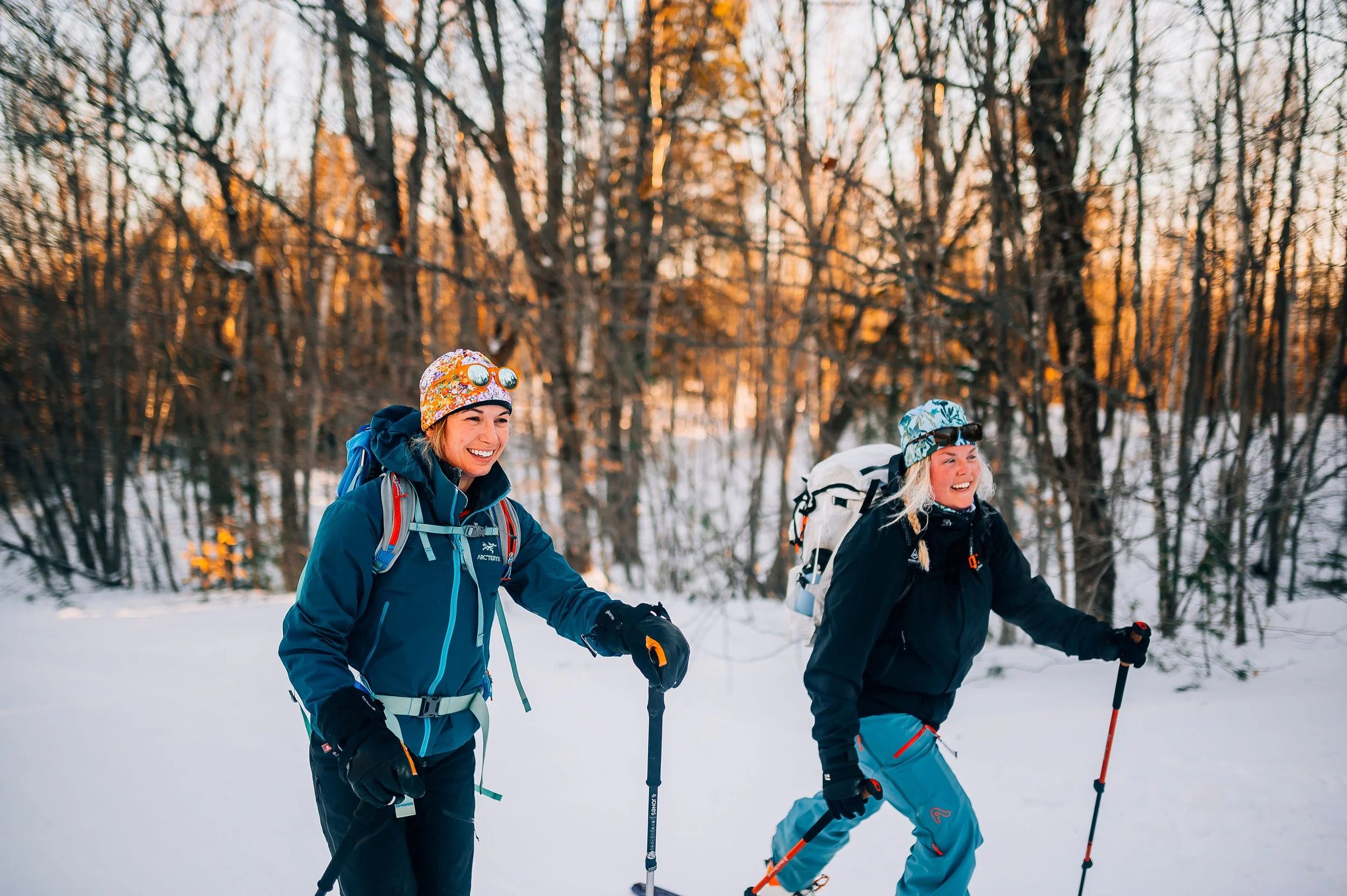
Northeast touring guide
Where to tour in the Northeast, region by region: what is there, when it comes into condition, how to get to it and what each place asks of you. Useful whether you are touring with us, with your own people, or both, which is what most of our participants do.
What this guide is for
People ask us where to go. Not instead of coming on a program day, but as well as one: where the zones are, when each one comes into condition, where to park and what the place asks of you. That is a reference nobody in the Northeast had written down in one piece, so this is us writing it.
It is worth saying plainly what this guide is not. It is not a graduation certificate and our programs are not a course you finish. Our mission is to develop an inclusive uphill community as well as to give people a first day, and a community is something you stay part of: 126 of our participants in 2026 were people who had come before. Touring on your own and touring with the group are not two stages, they are two things the same person does. Use this guide for the days you plan yourself, and we will see you on the days we run.
This guide is in progress. What is below is the outline, and each section fills in as it is written. Everything it depends on is already published: avalanche education, uphill policies and skin track etiquette.
Uphill at resorts, and why it is still the best place to start
Uphill routes at ski areas are patrolled, they are close to a parking lot and a lodge, and they are not avalanche terrain. That combination is hard to beat, whether it is your first winter or your tenth, and there are more than twenty of them in the Northeast that allow it. It is also where we run most of our own days, for the same reasons. See uphill policies for how to find the rules at any of them, and consider an Uphill New England season pass.
The backcountry zones
Northeast backcountry touring is concentrated in a handful of areas, each with its own character, its own season and its own access questions. The three that matter most here are the White Mountains, including Mt. Washington and the surrounding notches; the Green Mountains and the Vermont glades; and western Maine.
Two things will be true of every zone in it. Glades on public land are often maintained by volunteer organizations, and those organizations are worth joining. And the difference between a zone that is avalanche terrain and one that is not is the single most important thing to know before you go, which is why avalanche education comes before this guide, not after it.
The season, month by month
The Northeast has a short, variable and often icy season, and knowing roughly what to expect when saves a lot of wasted driving. Here is December through April: what is realistically skiable in each month, and how the freeze and thaw cycle shapes it. Short version: December is thin, January and February are the season, March is the best skiing of the year, and April is spring corn if you are willing to start early.
Access, parking and permits
Where you can leave a car in winter is the most underestimated problem in Northeast touring. Three things to know: winter trailhead parking is limited and gets plowed in, a White Mountain National Forest recreation pass covers most WMNF trailhead parking, and a number of the best glades sit on land where access depends entirely on landowner goodwill and therefore on behavior. Detail on each zone is coming.
The organizations worth knowing
Granite Backcountry Alliance, Uphill New England, the local avalanche center, and the volunteer glade-cutting groups in each state. Granite Backcountry Alliance is the one to join first if you ski in New Hampshire or western Maine. Joining any of them is the cheapest way there is to find people to tour with, and the glades you ski exist because volunteers cut them.