
Volunteer with us
Volunteers are the reason an on-resort day is $25, and every signup also has a $10 option and a free option. In 2026, 76 unique volunteers gave 2,295 hours. Here is what it involves and how to join them.
What volunteering actually involves
A program day runs about four hours, typically 8:00 to noon. You help at check-in, you help people get skins on, and then you tour with a group and make sure nobody gets left behind. That is most of it. Some volunteers sweep at the back, some lead from the front, and some spend the whole morning at the lodge being the friendly face somebody needed.
Three programs a season is the minimum we ask, so that you get to know the people and the routine rather than doing it once. Most volunteers do considerably more: across the 2026 season, 76 unique volunteers gave 2,295 hours, which is an average of about thirty hours each.
The moment when all participants make it to the top of the climb, exhausted and happy to be done but elated and with a sense of pride and accomplishment.Volunteer, 2025 season
What you need, and what you do not
The single most common thing people say when they apply is some version of "I am probably not good enough". Almost nobody who says it is right. Most of our volunteers have one or two seasons of touring behind them, several started as participants on our own programs, and the job on the way up is encouragement and company rather than instruction.
Experience, honestly
For an assistant volunteer on an on-resort day: you have toured before, a handful of days is plenty, and you are comfortable on the terrain we use. That is it. You do not need to be a guide, an instructor, an expert skier or fast. Several of our best volunteers describe themselves as beginners.
Lead volunteers are different. A lead has volunteered on two IST tours first, at any location, so nobody is put in front of a group before they are ready. At a new location, where nobody has IST tours yet, we approve leads on experience.
Gear knowledge
You do not need to know every binding on the market. This is the thing volunteers most often ask for help with, so we cover setups in training and there is always somebody on the day who knows the awkward ones. If a binding needs adjusting rather than explaining, that is a job for the resort rental shop or ski patrol, not for you.
First aid certification
Welcome, and not required for on-resort days. Some of our volunteers are wilderness first responders and nurses. Plenty have nothing, or something that expired years ago. Tell us what you have and we will place you accordingly.
Affinity programs, if you are not in that group
People ask us this a lot and worry about it more than they need to. Our affinity days are led and assisted by volunteers from that community wherever we can, and where we cannot, allies are welcome and useful. Say on your application which programs you are interested in and why, and we will place you somewhere it works for everybody. You are not taking a place from somebody by applying.
Your own gear
Yes. Volunteers bring their own touring setup. If gear is the only thing stopping you, tell us anyway.
Training, which is required
Every volunteer is trained before the season, and in New England it is all online, so a long drive is never a reason to rule yourself out: a short orientation call, then the volunteer packet and a quiz on it. Lead volunteers also read the lead packet and join a call for their mountain with its coordinator, and new volunteers are paired with a volunteer mentor. In Colorado, training is in person in the Denver area.
We will teach you how we run a group, how no-drop works in practice, what to do if somebody needs to turn around, and enough about gear to be useful. If you cannot make any of the dates, email us rather than not applying, because we will usually find a way.
Reading the etiquette page beforehand is genuinely useful, and it is short.
Where your job ends on the day
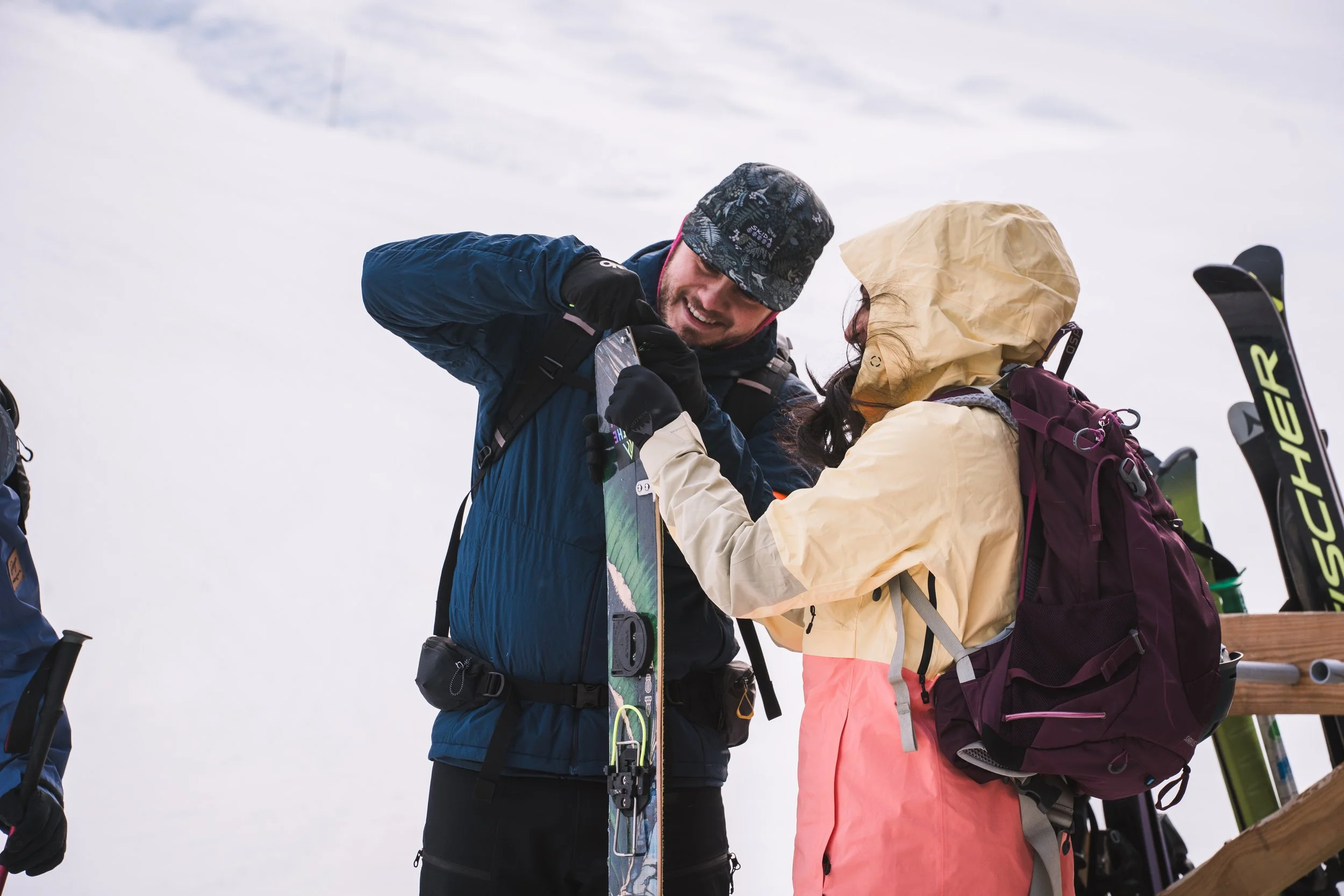
Assistant volunteers help participants work out their layers, help with check-in, encourage people all the way up, and are the last person up and down the mountain so that nobody is behind you. You stay with the group on the descent as well as the climb.
Picking your days
Program days are claimed through an online scheduler and they go first come, first served. Backcountry days go fastest. We announce when the schedule opens by email, so watch for it.
The one thing we are strict about
No unsolicited technique advice, and ask before helping. Our participants are often people who have been talked over in outdoor spaces before, and the whole value of a no-drop day evaporates if somebody feels coached at. If that sounds like an odd rule, this may not be the right fit, and that is fine.
How it goes
Sign up
Volunteer applications are open year round, so you can apply any time and we will come back to you either way. The stretch that matters runs mid September to mid November, when we recruit for the coming season and match volunteers to mountains and dates.
Apply any time. The application is open year round.
Mid September to mid November is when we recruit and match for the coming season.
Training runs from late November into December, and every volunteer does it.
If you apply after volunteer training has run, we hold your application for the following season. We do not add volunteers mid season, because they would miss training.
Found us mid winter? Come to a program as a participant, see what a day actually looks like, then train with us in the fall and volunteer the season after.
In Colorado? The application is the same, and here is how volunteering works there.
I love the big tours because of the excitement and enthusiasm everyone has, especially trying something new. And I love the small tours where you have a chance to get to know everyone and have in-depth conversations on your way up.Volunteer, 2025 season
Becoming a mountain coordinator
Each partner mountain has a volunteer coordinator who runs the season there: dates, volunteers, the relationship with the mountain. It is a real commitment and it is the most important volunteer role we have. To take one on, say so on the application. The current coordinators are here.
Related


